
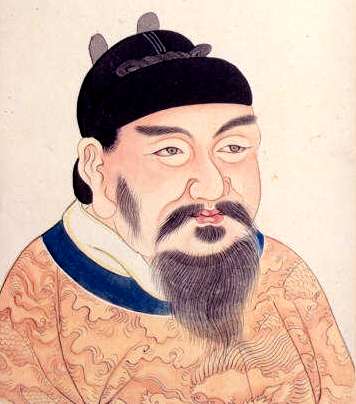
Emperor Gaozong of Tang
Third Tang emperor who ceded rule to Empress Wu.

Gary Todd from Xinzheng, China · CC0
- field
- Monarchy
- nationality
- Chinese (Tang dynasty)
- known_for
- Delegating power to Empress Wu; conquests of Baekje, Goguryeo, and Western Turkic Khaganate; later loss of territories to Tibetan Empire, Silla, Khitans, and Balhae
Lore & Background
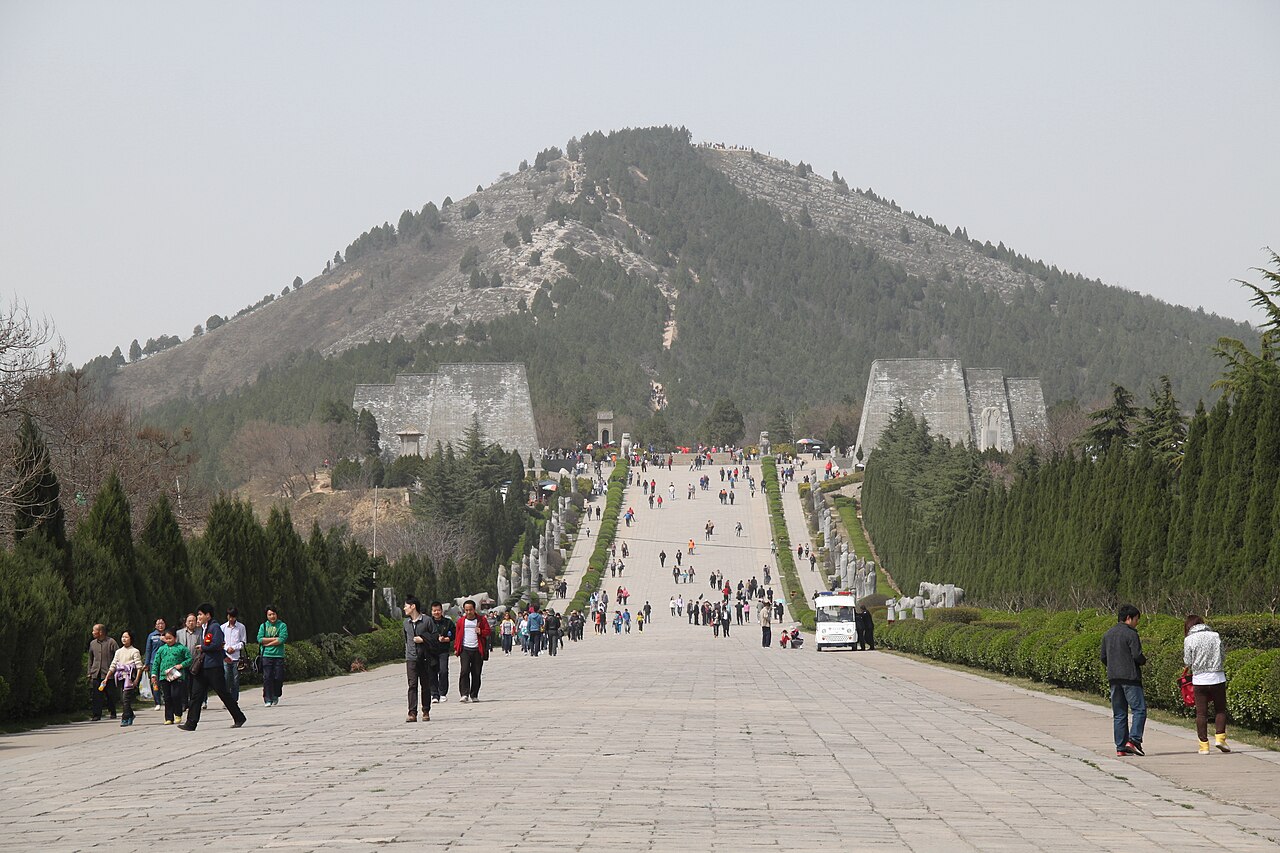
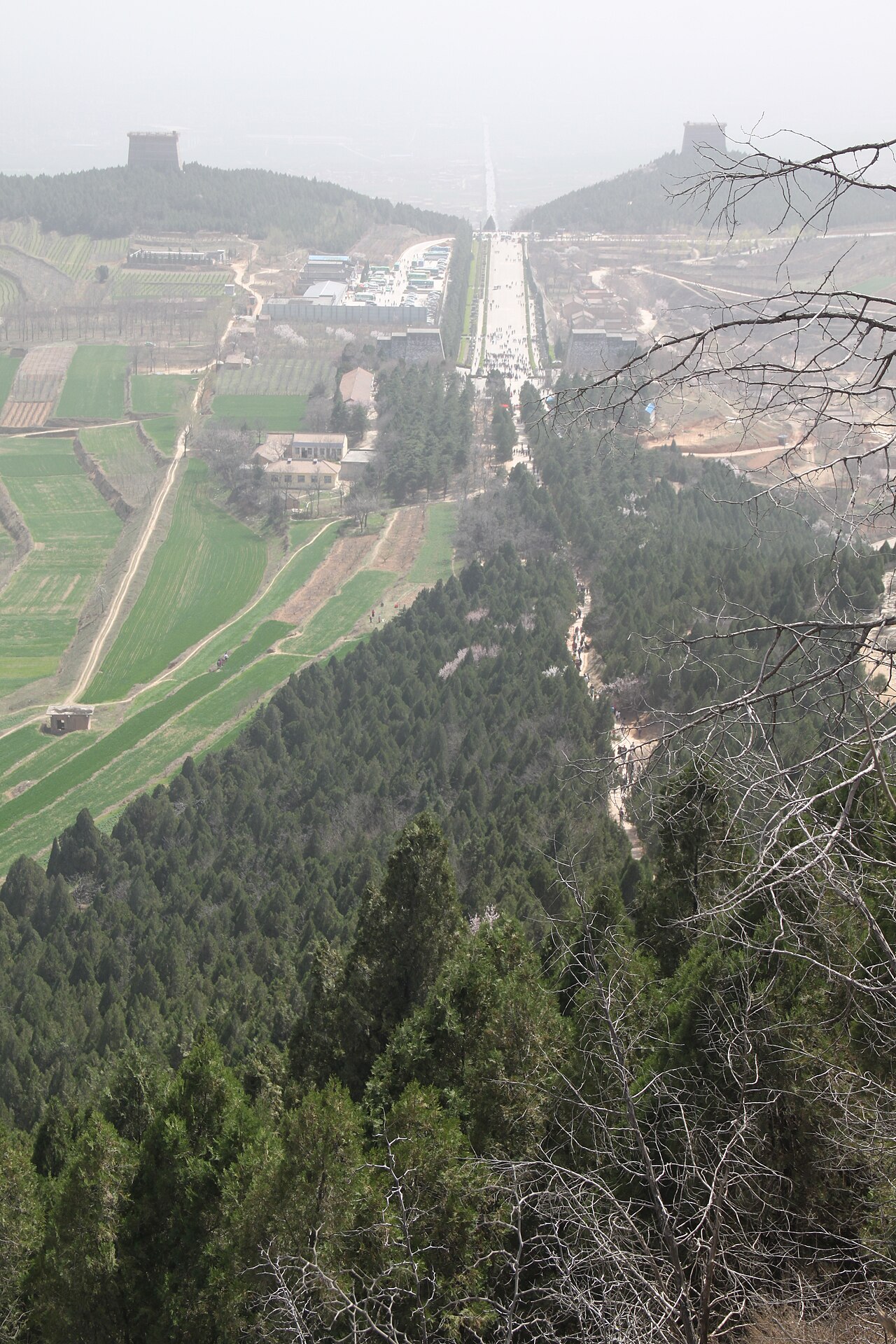
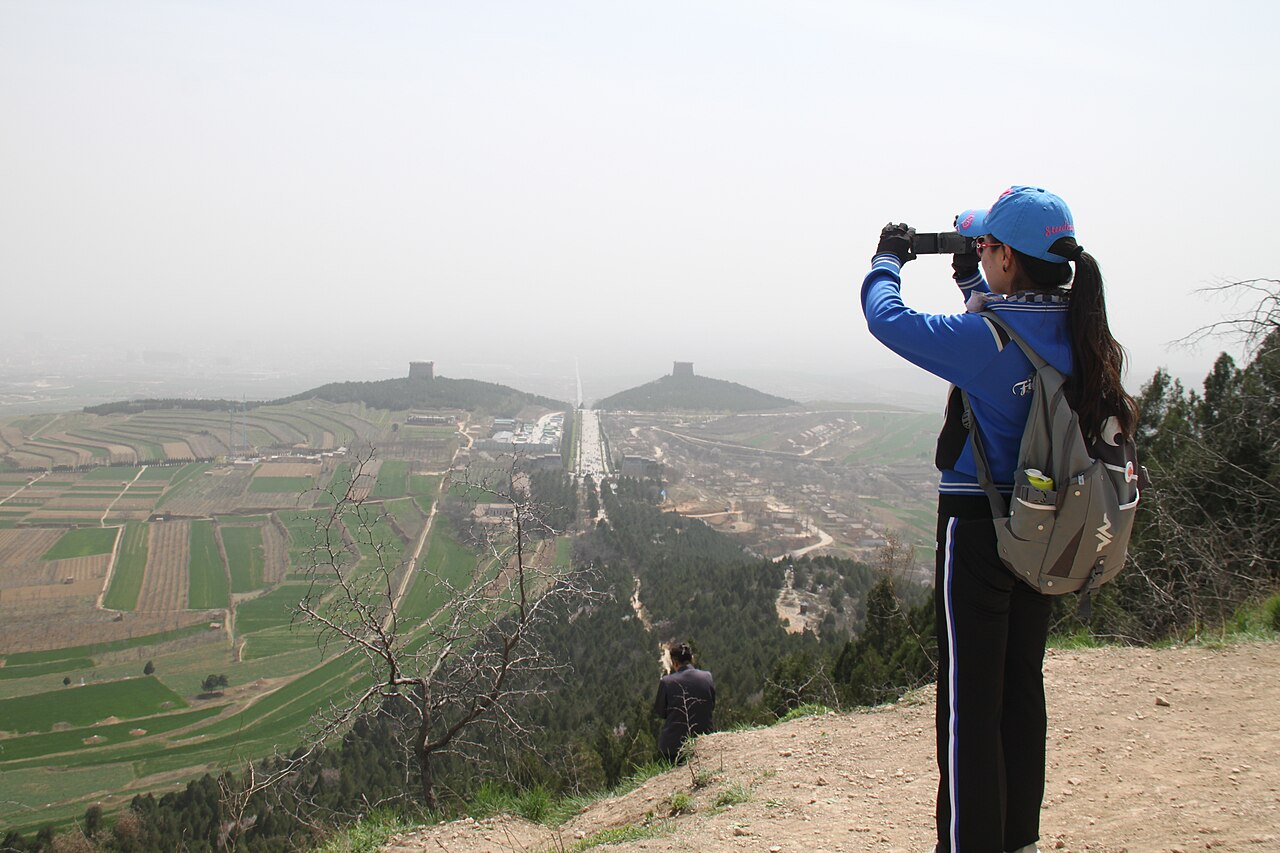
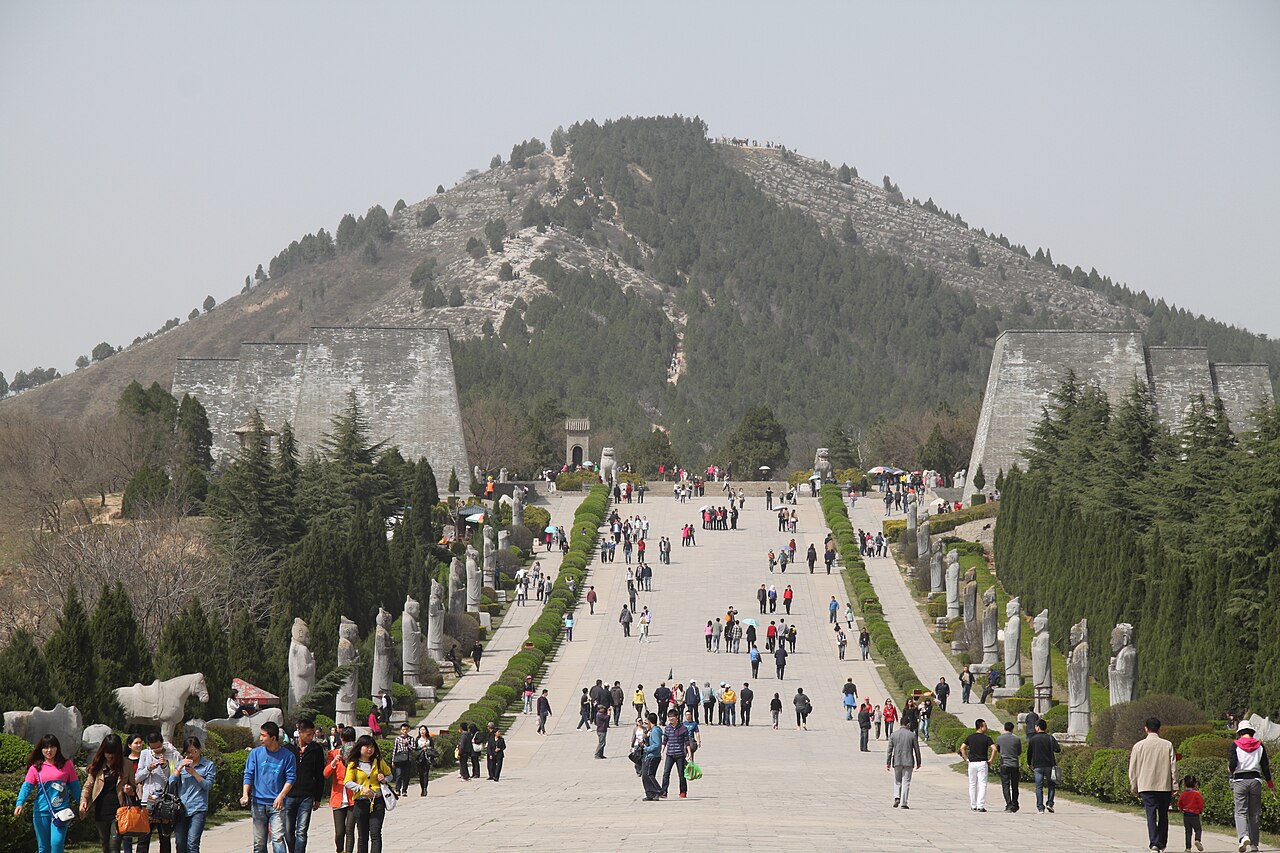
Li Zhi was the youngest son of Emperor Taizong and Empress Zhangsun. As crown prince, he was considered kind but weak in character, and his father Emperor Taizong briefly considered replacing him with Li Ke. Emperor Gaozong's reign saw continued territorial expansion early on, including the conquest of Baekje, Goguryeo, and the Western Turkic Khaganate. However, from the 670s, much of this territory was lost to the Tibetan Empire, Silla, Khitans, and Balhae. The pair were called 'two saints' (二聖) due to their equality of power. He was interred at the Qian Mausoleum along with Wu Zetian. Historians debate whether Wu exerted undue influence or whether they were equal partners in government.
Reader's Guide
Emperor Gaozong's reign is a pivotal period in Tang history, marked by the transition of effective rule from the emperor to his wife, Empress Wu. While early military successes expanded the Tang empire, the later decades saw significant territorial losses. The debate over Wu's influence—whether she was a usurper or a co-ruler—remains unresolved in historical scholarship. Gaozong's personal illness and trust in Wu enabled her to wield power, culminating in her sole rule after his death. His legacy is thus intertwined with the rise of Wu Zetian, the only female emperor in Chinese history. The Qian Mausoleum, where both were buried, stands as a symbol of their joint rule. Gaozong's reign also illustrates the fragility of imperial authority when delegated to a consort, a topic of enduring interest to historians.
Did You Know?
- Emperor Gaozong was the youngest son of Emperor Taizong and Empress Zhangsun.
- Emperor Gaozong and Empress Wu were called 'two saints' (二聖) due to their equality of power.
- He was interred at the Qian Mausoleum along with Wu Zetian.
The Unlikely Heir
Li Zhi was born in 628 as the ninth son of Emperor Taizong and the third child of Empress Zhangsun. Named Prince of Jin in 631 and given the nominal post of commandant over Bing Prefecture in 633, he nonetheless remained in the capital Chang'an throughout. His father's fondness for him grew after Empress Zhangsun's death in 636, when Taizong was visibly moved by the young prince's grief. His marriage, arranged at the suggestion of his grand aunt Princess Tong'an, connected him to the household of Wang Yu. The road to succession was paved by crisis. In 643, the bitter rivalry between his elder brothers Li Chengqian and Li Tai culminated in a conspiracy involving the general Hou Junji and other court figures. When the scheme was exposed, Taizong stripped Li Chengqian of his title and at first considered elevating Li Tai. The chancellor Zhangsun Wuji, however, pressed for Li Zhi instead. Sensing the shift, Li Tai tried to rattle the younger prince by pointing out his prior friendship with one of the conspirators. Taizong, hearing of this intimidation, sealed his choice: Li Tai was exiled, and on 30 April 643, Li Zhi became crown prince, flanked by a carefully assembled group of senior chancellors and learned scholars.
The Two Saints
The later years of Gaozong's reign are defined by a political partnership with his second wife, Empress Wu, that has no parallel in Chinese imperial history. After a series of strokes left the emperor increasingly incapacitated, he progressively entrusted the conduct of state to her. From November 660 she held partial authority, and from January 665 until his death in December 683 she exercised full control over governance. In practice, her edicts were enforced with greater weight than the emperor's own. Contemporaries and later historians alike referred to the couple as the "Two Saints," a title implying two sovereigns sharing the throne. The arrangement was described with the formula "hanging the curtain and listening to politics," capturing the empress's role as the effective decision-maker behind the imperial facade. Yet the historical record offers no simple verdict. Official Tang chronicles and modern scholars continue to debate whether Wu exerted improper influence over a weak husband or whether the two genuinely governed as equals. What is clear is that Gaozong's personal trust, affection, and physical decline created the conditions under which one woman came to dominate the machinery of the Tang state.
Empire at Its Zenith and Erosion
The first phase of Gaozong's reign carried forward the territorial expansion that his father Taizong had initiated. Under Gaozong's authority, Tang armies conquered Baekje, pressed campaigns against Goguryeo, and absorbed the Western Turkic Khaganate, stretching the empire's borders to their greatest extent. For a time, the Tang held sway over a vast arc of Central and East Asian territory. Yet the 670s brought a dramatic reversal. The Tibetan Empire, the Korean state of Silla, the Khitan confederation, and the emerging power of Balhae all reclaimed or seized portions of the lands Tang had recently taken. In the western regions, territories previously subjugated under both the Göktürk and Western Turkic Khaganates erupted in repeated uprisings, straining the military and administrative apparatus that had to garrison and govern them. The pattern of conquest followed by attrition defined much of Gaozong's middle and late reign, leaving the empire's frontiers more contested and less secure than they had been at the height of his father's campaigns.
The Throne's Final Shadow
Emperor Gaozong died in December 683, ending a thirty-four-year reign that had begun in 649. His passing did not, however, mark the end of Wu's ascendancy. As Empress Dowager-regent, she assumed the full apparatus of sovereignty, "presiding over court and issuing edicts" in her own name. Within a few years she would become the sole empress regnant in the entire history of China, a distinction no other woman has held. The political architecture Gaozong had built—whether by design or by the slow erosion of his own authority—handed the empire directly into Wu's hands without the usual succession disputes that plagued other Tang transitions. In death, as in life, Gaozong remained bound to Wu: the two were interred together at the Qian Mausoleum, a physical testament to the inseparability of their political partnership. For historians, his reign poses a persistent question: was he a capable sovereign gradually sidelined by illness and a formidable spouse, or a willing co-ruler who shared power with an equal? The sources from his own era to later dynastic compilations offer no consensus, leaving Gaozong's legacy permanently entangled with Wu Zetian's.
Gallery
More in Chinese Emperors And Leaders 1-22
Spotted an error? Know more?
This is a living reference — every entry is fact-audited, and reader corrections feed straight into our audit queue. Suggest an edit · See this site's audit record