
Duke Huan of Qi
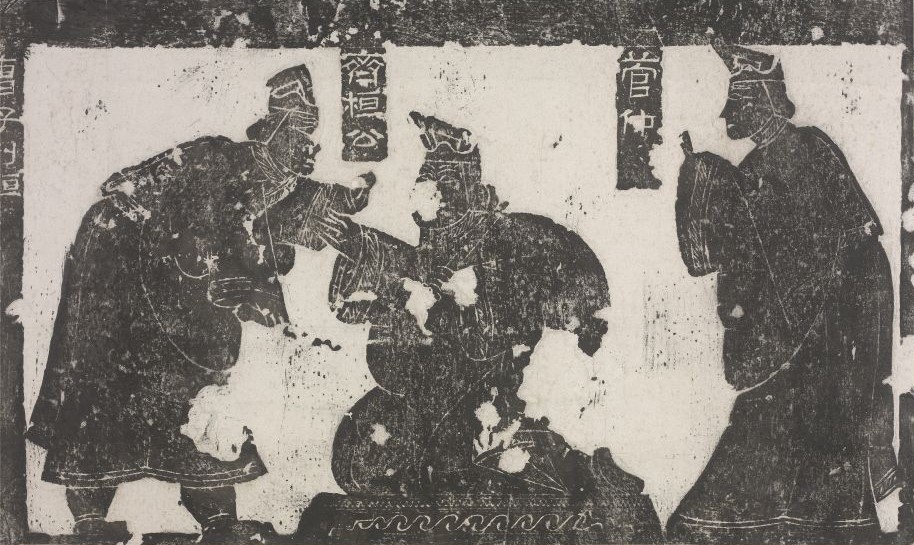
Duke of Qi who became the first hegemon of the Spring and Autumn period.

Wikimedia Commons · Public domain
He is commonly listed among the Five Hegemons of the Spring and Autumn period. Together with his long-time advisor Guan Zhong, he transformed Qi into China's most powerful polity and established a new interstate order under Zhou authority.
- born
- Unknown (son of Duke Xi of Qi)
- field
- Ruler, hegemon
- nationality
- Qi state (Zhou dynasty China)
- known_for
- Leading Qi to hegemony; reforming government and society with Guan Zhong; convening interstate meetings; being one of the Five Hegemons
Lore & Background
Xiaobai was born as one of Duke Xi of Qi's sons, though not in line of succession as he had at least two older brothers: Zhu'er and Jiu. In his youth, he was tutored by Bao Shuya. When Duke Xi died, Zhu'er became Duke Xiang, but his reign was fraught with internal conflicts. Fearing for his pupil's life, Bao Shuya took Xiaobai into exile in the state of Ju. His brother Jiu, supported by Duke Zhuang of Lu and Guan Zhong, invaded but was defeated at Qianshi. Qi then invaded Lu, demanding Jiu and his supporters be handed over; Duke Zhuang executed Jiu and delivered Guan Zhong as a prisoner. Following Bao Shuya's advice, Duke Huan spared Guan Zhong and appointed him chief minister. Together they reorganized Qi's government and society, dividing land and people into regulated units and enforcing a meritocratic system. This allowed Qi to mobilize resources more effectively than other Zhou states, bringing it to unprecedented leadership. King Hui of Zhou then appointed him hegemon (ba) with authority to operate militarily in the name of the royal court. After almost forty years, Duke Huan's dominance declined. His efforts to stop Chu's expansion failed as Chu shifted eastward along the Huai River. Duke Huan grew ill and was increasingly ignored by other leaders. Factions formed among six of his sons (Zhao, Wukui, Pan, Shangren, Yuan, and Yong) and high officials. According to the Han Feizi and Lüshi Chunqiu, four powerful courtiers—Tang Wu, Yiya, Shu Diao, and Gongzi Kaifang—conspired against him, locked him in his room, and starved him to death. The Recor
Reader's Guide
Duke Huan of Qi is significant as the first of the Five Hegemons, a figure who reshaped the political landscape of the Spring and Autumn period. His reign demonstrates how a capable ruler, aided by a talented advisor like Guan Zhong, could transform a state through administrative and military reforms. By centralizing governance and mobilizing resources efficiently, Qi achieved dominance over other Zhou polities. Duke Huan's use of the hegemon title—granted by the Zhou king—allowed him to act as a stabilizer, intervening in conflicts, defending against 'barbarian' incursions, and convening interstate meetings that set precedents for diplomatic order. However, his later years reveal the fragility of such power: the death of his key advisor, his own illness, and factional strife among his sons and officials led to Qi's rapid decline. The disputed account of his death (starved by courtiers, per the Guanzi) underscores the chaos that followed. His legacy is that of a unifier who temporarily restored Zhou authority but could not prevent the fragmentation that would define the era. The war of succession among his six sons and the rotting of his corpse before burial symbolize the collapse of his achievements.
Did You Know?
- Duke Huan's personal name was Lü Xiaobai, and he was not originally in line for the throne, having at least two older brothers.
- He was tutored by Bao Shuya, who later fled with him into exile in the state of Ju to protect him from the turmoil of Duke Xiang's reign.
- According to the Han Feizi and Lüshi Chunqiu, four courtiers conspired to starve Duke Huan to death, and his corpse lay unattended for 67 days before burial.
Rise to Hegemony
The collapse of centralized Zhou authority following the violent death of King You created a power vacuum that regional states rushed to fill. Qi, a state founded around 1046 BCE on the Shandong peninsula with its capital at Linzi, seized this moment. Under Duke Huan (r. 685–643 BCE), the Jiang clan's domain transformed from a modest fief into the dominant force on the northern Chinese plain. In 667 BCE, the lords of Qi, Lu, Song, Chen, and Zheng gathered for what is recognized as one of the earliest great interstate conferences. At this assembly, Duke Huan was chosen as their collective leader. King Hui of Zhou then formally pronounced him Bà, the 'hegemon-protector,' a title binding him to safeguard the Zhou royal house and uphold the authority of the Son of Heaven. As the first of five such hegemons, Duke Huan received tribute from other states while simultaneously owing the royal court a larger tribute than any other ruler. His calls to arms carried the same binding force as the king's own decrees, making Qi the de facto arbiter of interstate order for a generation.
Administrative Reforms and Economic Power
Duke Huan's most enduring contribution lay not on the battlefield but in the restructuring of Qi's internal governance, a project largely driven by his minister Guan Zhong. The pair dismantled the old system in which landed aristocrats held quasi-independent authority over their estates, consolidating real power into the hands of the central government at Linzi. They established a network of counties (xiàn) administered directly by ministers appointed by the state court, effectively bypassing hereditary local lords. Economically, Guan Zhong introduced state monopolies over salt and iron production and trade, channeling enormous revenue into the treasury. These measures—centralized bureaucracy, direct territorial administration, and state-controlled key industries—anticipate the political philosophy later codified as Legalism. The results were tangible: Qi annexed thirty-five neighboring polities, including Tan, and compelled additional territories into submission, building a sphere of influence that stretched well beyond the Shandong region. The combination of fiscal strength and administrative reach gave Duke Huan the material base to project military power and enforce his hegemonic role across the Zhou realm.
Military Interventions and Alliance Leadership
During the first eleven years of his hegemony, Duke Huan deployed Qi's military might in a series of interventions that defined the diplomatic order of the Spring and Autumn period. He intervened in a succession power struggle within Lu, using Qi's superior force to shape the outcome in favor of a preferred candidate. When Western Rong nomads pressed against Yan's borders, Qi came to the state's defense, repelling the incursion. The Northern Di nomads, after raiding the territories of Wey and Xing, were driven back by Qi's armies, and the displaced populations received provisions and protective garrison units from the Qi state. Perhaps most ambitiously, Duke Huan assembled an alliance of eight states to conquer Cai, a strategic move designed to block the northward expansion of Chu, the great southern power. Each of these actions was conducted under the banner of protecting the Zhou royal house and upholding the Son of Heaven's authority, yet in practice they cemented Qi's position as the indispensable enforcer of regional security. The hegemon's authority to call armies was as binding as the king's own, making these interventions legally legitimate within the Zhou framework even as they served Qi's own strategic interests.
Legacy and the Long Decline
Duke Huan's death in 643 BCE triggered a succession crisis that unraveled much of what he had built. A war between rival claimants to the Qi throne severely weakened the state and brought its era of hegemony to a close. In the decades that followed, Qi's role shifted from dominant leader to one player among several great powers. In 632 BCE, Qi contributed troops to Jin's victory over Chu at the Battle of Chengpu, yet just a few years later in 589, Jin turned on Qi and defeated it at the Battle of An. By 579 BCE, the four great powers—Qin, Jin, Chu, and Qi—met to declare a truce and mutually limit their military strength, a clear acknowledgment that no single state could dominate the others. The Jiang clan's rule over Qi would eventually end in 386 BCE when the Tian family fully replaced them, and the state would survive until 222 BCE, when it became the last of the Warring States to fall to Qin's unifying armies. Duke Huan's brief but transformative reign thus stands as a high-water mark for Qi, a moment when a single ruler and his minister reshaped the political landscape of ancient China.
Gallery
More in Chinese Emperors And Leaders 1-22
Spotted an error? Know more?
This is a living reference — every entry is fact-audited, and reader corrections feed straight into our audit queue. Suggest an edit · See this site's audit record